
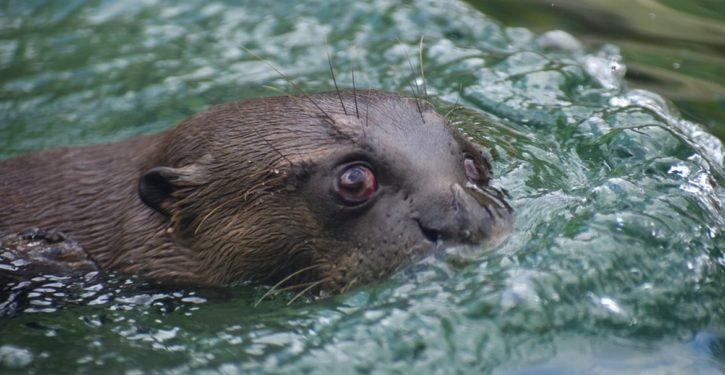
“Thanks to decades of improving water quality, otters are making a comeback in the UK, turning up in rivers all over the country and even wandering into urban waterways and backyard ponds,” reports The Doomslayer.
The Guardian reports:
Unlike the fox, the otter has been a rare visitor in towns and cities across the UK. But that is changing. In the past year alone, the aquatic mammal has been spotted on a river-boat dock in London’s Canary Wharf, dragging an enormous fish along a riverbank in Stratford-upon-Avon, and plundering garden ponds near York. One otter was even filmed causing chaos in a Shetland family’s kitchen in March.
Janice Bradley of the Nottinghamshire Wildlife Trust says: “Twenty years ago, they were almost nonexistent. Then we saw them coming up the River Trent from other areas. Now, we’ve got records of otters in virtually every river and watercourse in the county.”
Nobody knows how many otters there are in the UK, although it is widely agreed that the population has increased, after nearly being wiped out in the polluted waterways of mid-20th century Britain. Some naturalists estimate there are 11,000 nationwide…
In the 1970s, surveyors searched nearly 3,000 sites across the UK, but found the animals at just 6% of them, mainly in strongholds in Scotland, Wales, Norfolk and south-west England. Now, they are widespread, using their sensitive whiskers and webbed feet to hunt in waters across the country.
Meanwhile, giant river otters Coco and Nima have returned to Argentina’s Iberá wetlands after otters were wiped out there 40 years ago. “Rewilding Argentina has released the pair and their two pups” into the 3100 square-mile Iberá Park, “restoring a keystone predator once hunted to national extinction.”
In 2023, a baby beaver was born in London, the first beaver birth there in 400 years, and carnivorous plants were reintroduced to English wetlands.
A wasp is saving one of the world’s rarest birds from extinction.
An endangered rare duck has made a comeback in China.