
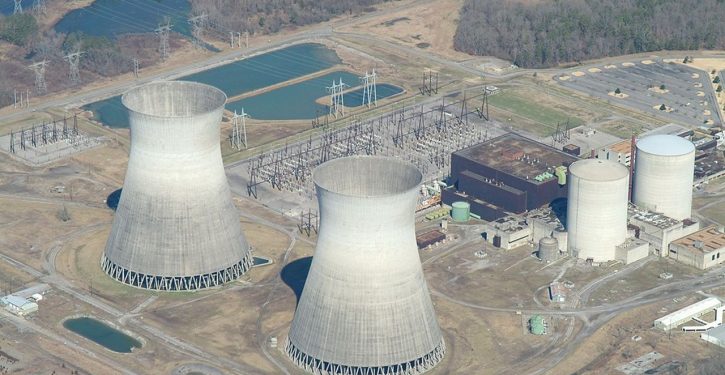
“Valar Atomics has become the first company in the Department of Energy’s new pilot program to achieve a self-sustaining chain reaction in its reactor. This is a test, not a commercial deployment, but it marks early progress in an effort to bypass the normal onerous licensing process for test reactors and help younger nuclear companies bring their designs into reality,” reports The Doomslayer. A self-sustaining nuclear reaction is significant because it enables the continuous, large-scale release of immense amounts of energy from a small amount of fuel, which can be harnessed in a controlled manner for reliable, low-carbon electricity generation.
Wired explains:
Startup Valar Atomics said on Monday that it achieved criticality—an essential nuclear milestone—with the help of one of the country’s top nuclear laboratories. The El Segundo, California-based startup, which last week announced it had secured a $130 million funding round with backing from Palmer Luckey and Palantir CTO Shyam Sankar, claims that it is the first nuclear startup to create a critical fission reaction.
It’s also, more specifically, the first company in a special Department of Energy pilot program aiming to get at least three startups to criticality by July 4 of next year to announce it had achieved this reaction. The pilot program, which was formed following an executive order president Donald Trump signed in May, has upended US regulation of nuclear startups, allowing companies to reach new milestones like criticality at a rapid pace…
Criticality is the term used for when a nuclear reactor is sustaining a chain reaction—the first step in providing power…
There’s a difference between the type of criticality Valar reached this week—what’s known as cold criticality or zero-power criticality—and what’s needed to actually create nuclear power. Nuclear reactors use heat to create power, but in cold criticality, which is used to test a reactor’s design and physics, the reaction isn’t strong enough to create enough heat to make power.
Before this year, startups like Valar would have to go through the country’s nuclear regulator, the Nuclear Regulatory Commission (NRC), before trying any criticality tests. The NRC, which has a lengthy licensing process, traditionally maintains authority over all nuclear reactors. This includes small modular reactors, which, as their name suggests, are much smaller than traditional nuclear reactors; these advanced technologies, like the ones Valar is trying to bring to market, have never been commercially deployed in the US. However, both the Department of Defense and the Department of Energy have some legal ability to develop their own reactors without going through the NRC, including some solely used for research purposes.”
In August, the U.S. Department of Energy (DOE)
kicked off President Trump’s Nuclear Reactor Pilot Program, announcing DOE will initially work with 11 advanced reactor projects to move their technologies towards deployment. DOE will work with industry on these 11 projects, with the goal to construct, operate, and achieve criticality of at least three test reactors using the DOE authorization process by July 4, 2026. Today’s initial selections represent an important step toward streamlining nuclear reactor testing and unleashes a new pathway toward fast-tracking commercial licensing activities.
Some utilities are exploring the possibility of building small modular reactors.
Right now, nuclear energy produces nearly 20% of the electricity generated in America. Nuclear energy produces no greenhouse gas emissions or air pollution. Nuclear plants generate most electric power in countries like France and Slovakia, but in the U.S., it has been much more difficult and costly to construct a nuclear power plant. The Nuclear Regulatory Commission makes it very expensive to construct a nuclear plant — even the application process is incredibly expensive and usually takes years of unnecessary delay. Even when nuclear plants are already operating safely and providing badly needed power, anti-nuclear activists sometimes get government officials to shut them down. Recently, however, the NRC approved the construction of a nuclear plant with an innovative design and a non-water cooled reactor.